
Manuel Barreiro, ‘Paparolo’, comes from a very elemental, very old and also classical world. Isaac Díaz Pardo remembers him as ‘an old ceramist friend who has been linked to the Sargadelos Seminary for more than twenty years’. Well, this conscientious work is what justifies the importance of the work that he presented back in 1987 in that exhibition at the Casa da Parra in Compostela called “Current Galician Ceramics. Tendencies”. In a work entitled ‘Tendencias’, the artist shows us a magnificent repertoire of textures that give rise to lights and shadows that animate a whole surface that is a living testimony. Therein lies the elemental and ancient value of what can be said to us from clay.
But, as we said, ‘Paparolo’ is also classical. He insinuates this from another type of work in the aforementioned exhibition at the Casa da Parra entitled ‘Architectures’, a demonstration of his appreciation, with a marked sensitivity, of the ancient world, going far beyond what is a greater or lesser veracity in the formal follow-up represented by that classical period.
In 1992, in the collective exhibition ‘Volumes’ (Casa da Parra, Santiago), this sculptor showed us a whole series of approaches to man. His ‘homiños’ are beings made in terra cotta in which there is a great deal of anonymity and, also, of vital solitude. When the author groups his figures together, he does not find among them the slightest capacity for communication. Each one of them is engaged in the development of his own preoccupation, remaining in a decontextualised world, without the slightest reference that would make it possible to situate them in a time and a link, as if the sculptor-ceramist simply wanted to offer us a whole repertoire of human attitudes in full action.
His current work of 1993 is totally consistent with the path he had previously followed in terms of the analysis of the human figure, treated now, perhaps with a greater richness of nuances. The most novel aspect of his assessment of this theme is to be found, above all, in his way of locating the figure in space, an issue to which the author now gives clear importance, even in the title of some of his works: ‘Figure on a yellow background’ – alluding to the base he uses – and ‘Figure at rest’ – taking into account the support provided by the man now effigied – are very representative examples in this respect.
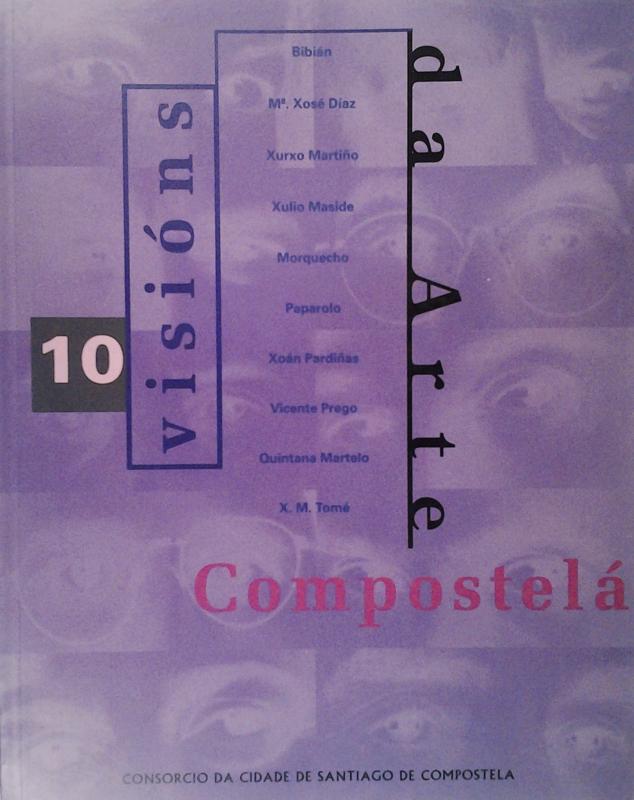
Jose Manuel García Iglesias, (Professor of Art History at the USC), in “10 visións da arte compostelá”, November 1993, review of the exhibition at the Museo do Pobo Galego.
Manuel Barreiro, ‘Paparolo’, comes from a very elemental, very old and also classical world. Isaac Díaz Pardo remembers him as ‘an old ceramist friend who has been linked to the Sargadelos Seminary for more than twenty years’. Well, this conscientious work is what justifies the importance of the work that he presented back in 1987 in that exhibition at the Casa da Parra in Compostela called “Current Galician Ceramics. Tendencies”. In a work entitled ‘Tendencias’, the artist shows us a magnificent repertoire of textures that give rise to lights and shadows that animate a whole surface that is a living testimony. Therein lies the elemental and ancient value of what can be said to us from clay.
But, as we said, ‘Paparolo’ is also classical. He insinuates this from another type of work in the aforementioned exhibition at the Casa da Parra entitled ‘Architectures’, a demonstration of his appreciation, with a marked sensitivity, of the ancient world, going far beyond what is a greater or lesser veracity in the formal follow-up represented by that classical period.
In 1992, in the collective exhibition ‘Volumes’ (Casa da Parra, Santiago), this sculptor showed us a whole series of approaches to man. His ‘homiños’ are beings made in terra cotta in which there is a great deal of anonymity and, also, of vital solitude. When the author groups his figures together, he does not find among them the slightest capacity for communication. Each one of them is engaged in the development of his own preoccupation, remaining in a decontextualised world, without the slightest reference that would make it possible to situate them in a time and a link, as if the sculptor-ceramist simply wanted to offer us a whole repertoire of human attitudes in full action.
His current work of 1993 is totally consistent with the path he had previously followed in terms of the analysis of the human figure, treated now, perhaps with a greater richness of nuances. The most novel aspect of his assessment of this theme is to be found, above all, in his way of locating the figure in space, an issue to which the author now gives clear importance, even in the title of some of his works: ‘Figure on a yellow background’ – alluding to the base he uses – and ‘Figure at rest’ – taking into account the support provided by the man now effigied – are very representative examples in this respect.
Jose Manuel García Iglesias, (Professor of Art History at the USC), in “10 visións da arte compostelá”, November 1993, review of the exhibition at the Museo do Pobo Galego.